
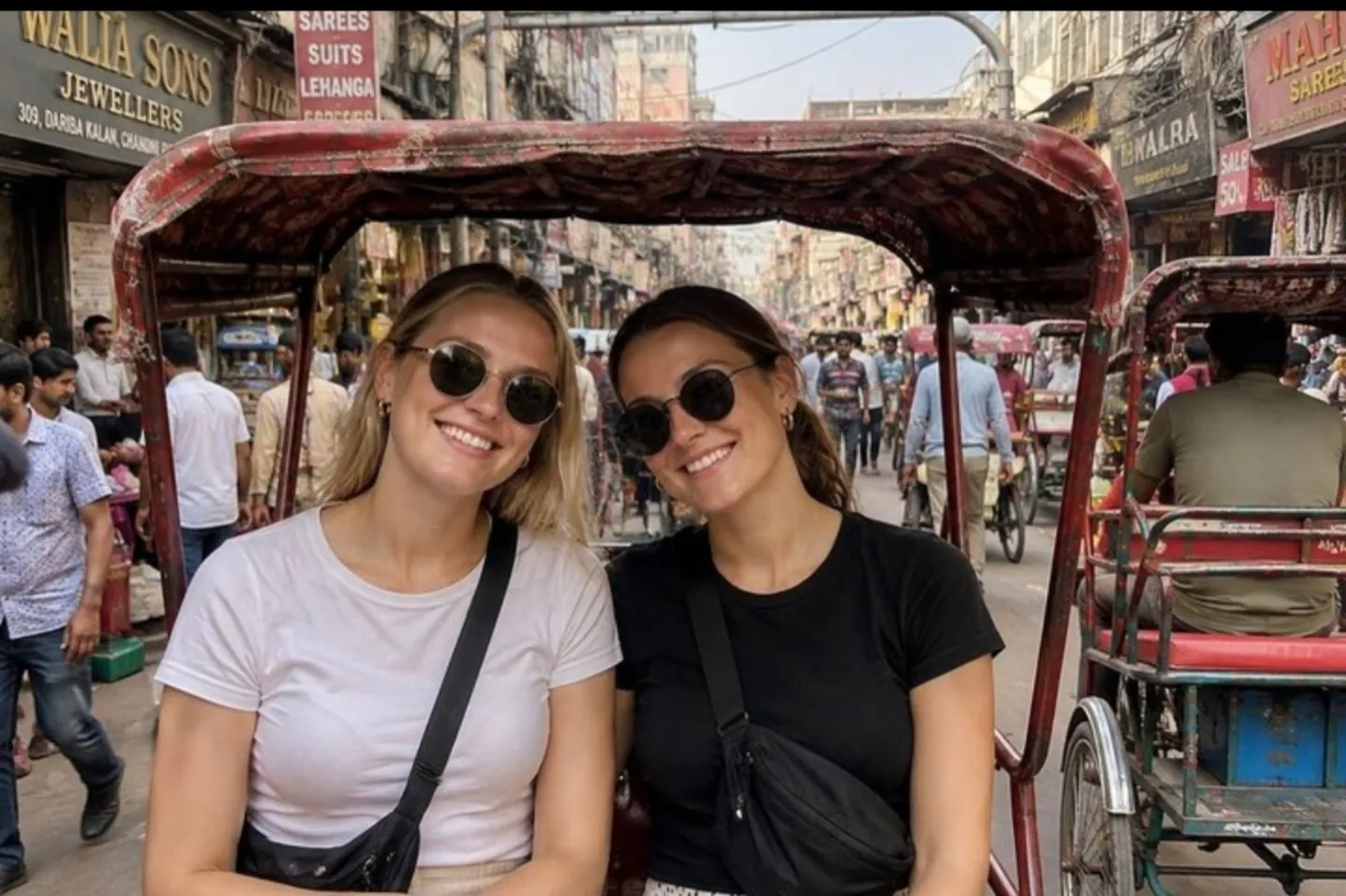
A private India journey suits travellers who value control over their pace, hotels and daily plans. A small group can suit those who enjoy ready-made company and a shared itinerary. Being over 50 does not determine either preference. Your interests, energy, budget and feelings about travelling with others are much more useful starting points.
At Travel in Layers, we arrange private journeys. This guide explains when that format is useful and the questions worth asking if you are comparing it with a small-group holiday. Our India's Iconic Cities journey offers one starting route; it can be shortened or adapted around your priorities.
What changes when the journey is private?
Your itinerary is agreed around your own party. You can choose dates, discuss different hotel styles and spend longer in a place that interests you. A couple interested in architecture may want a second visit to a monument. Friends who enjoy food may prefer a market walk and a long regional lunch. Neither needs to determine the other party's day.
Private travel still has limits. A booked train, temple opening period, safari permit or flight cannot simply move because you feel like a later start. The useful distinction is the freedom to shape the trip before booking, and the ability to adjust uncommitted time on the ground. Ask which parts of a day are flexible and which involve reservations.
Compare the experience, not just the headline price
| Question | Private journey | Small group |
|---|---|---|
| Who sets the pace? | Your party, within confirmed arrangements | The published programme and group needs |
| Who travels with you? | Your chosen companions | Other guests joining the departure |
| Can hotels vary? | Usually selected during planning | Usually specified for the departure |
| How are costs shared? | Across your own party | Across the participating group |
| Can you add a personal interest? | Discuss it while designing the route | Check free time or available extensions |
Compare like for like. Room category, number of guided days, entry fees, meals, vehicle arrangements and domestic connections can explain a large difference between two quotations. A lower initial figure does not tell you what you will actually spend during the trip.
Walking pace is personal
Some travellers in their seventies enjoy long walks; some younger travellers need shorter distances or fewer steps. Tell the planner what is comfortable in practical terms. For example: you enjoy a short walk with sitting breaks, find repeated stairs difficult, or prefer to avoid standing for long periods.
Ask how those needs affect specific visits. A private vehicle cannot enter every old-city lane or drive to every temple entrance. A heritage hotel may have attractive photographs but awkward access to your room. Private planning allows these details to be checked early. It should never be treated as a blanket promise of accessibility.
If companions have different interests, discuss whether a guide can accompany one person while another rests, and what additional arrangements that requires. Decide where you will meet again. An agreed split programme works better than trying to solve it after arriving at a crowded monument.
Company and independence
A small group can offer sociable meals and people with whom to share the day. Ask about the maximum group size, typical pace, free time and whether a tour leader accompanies the whole route. Those details tell you more than the phrase small group alone. A group of ten can still have a tightly scheduled programme.
A private holiday can be sociable too, through local guides, hosted meals and craft encounters, but those are not the same as having a consistent group of fellow travellers. If meeting other guests is a central reason for travelling, acknowledge that preference. For a solo private traveller, discuss guide coverage and evening arrangements so you understand how much time you will spend independently.
Budget for the experience you value
Private transport and guiding often cost more per person when shared by fewer travellers. Hotel standards and a complicated route can have a greater effect than the travel format itself. You may find better value by using fewer bases, choosing comfortable rather than luxury rooms, or saving one special hotel for a two-night stay.
In a group quotation, look for single supplements and optional activities. In a private quotation, check which services are exclusive to you. A private holiday may still use a shared boat excursion or shared safari vehicle unless the proposal states otherwise. Neither arrangement is necessarily wrong; it should simply match what you expect.
Make the decision around a typical day
Imagine breakfast, a morning visit, lunch, an afternoon break and dinner. Do you want to make several of those choices yourself, or enjoy having them arranged alongside other guests? Would a fixed early start every day feel reassuring or restrictive? This exercise often settles the question more clearly than a list of destinations.
For a first India visit, you can begin with India's Iconic Cities and tell us what you would keep, remove or slow down. Share your interests, preferred hotel atmosphere, walking needs and desired company. We can then explain what a private version would involve, with a clear route and written inclusions.