
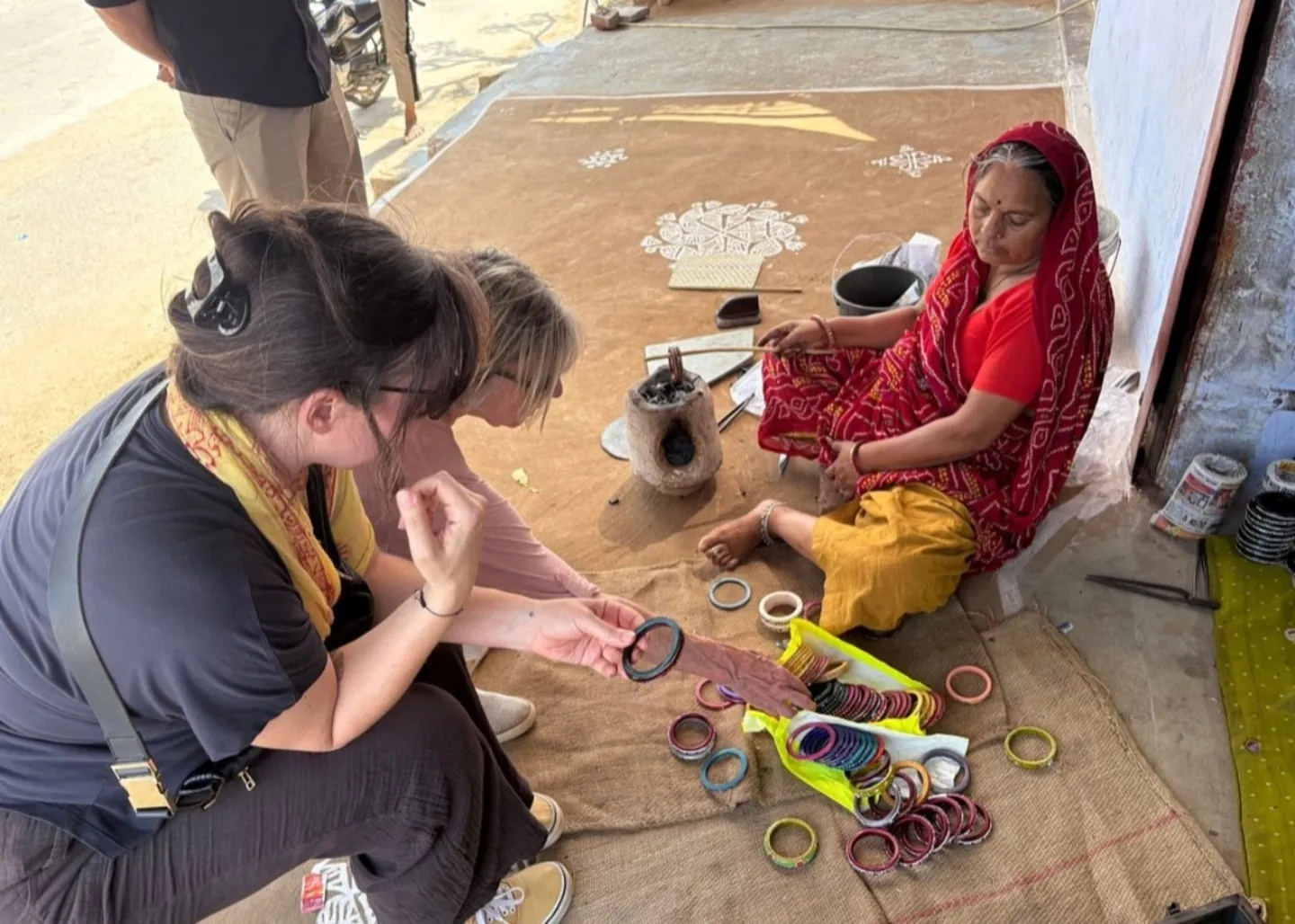
A Gujarat craft journey works best when it is organised around the techniques and people you want to understand. Choose a few interests, allow time with each host and keep the driving realistic. Visiting many workshops in quick succession can leave less understanding than a smaller number of well-arranged encounters.
Our Gujarat: Crafts, Salt Plains & Lions journey is a broad regional route. If textiles and craft are your main reason for coming, we can give Kutch more time and reduce unrelated stops. You do not need to include every part of Gujarat in order to have a rich craft-focused holiday.
Begin with a technique or question
You might be interested in weaving, block printing, embroidery, materials or the relationship between design and daily life. Tell us what you already know and what you would like to learn. A first-time visitor may want an introductory demonstration, while a textile practitioner may prefer a more detailed conversation about process.
Gujarat Tourism identifies Bhujodi with craft traditions and Ajrakhpur with ajrakh printing. These are useful starting points for choosing interests. They do not mean that every household or workshop is open to visitors, or that a particular maker is available on a chosen day.
Build around a practical Kutch base
Several nights around Bhuj can support different craft outings without changing hotels every day. The precise hotel location matters, as do the workshops you hope to visit. Ask for a route that groups nearby appointments and avoids repeated journeys across the same area.
A sample craft-led chapter might use the arrival day to settle in, followed by two or three focused outing days and a flexible departure. That gives room for one main workshop encounter in a morning and a shorter visit or rest later. The final duration should follow confirmed appointments and your wider connections, not an arbitrary checklist of villages.
A demonstration and a workshop are different bookings
A short demonstration may show part of a process without offering hands-on participation. A workshop needs materials, teaching time, a suitable space and agreement from the host. Ask what you will actually do, how long the session lasts and whether you can take a finished item away.
Some processes cannot be shown from beginning to end during a single visit. Drying, preparation or other stages may take longer than your stay. A good host can explain those stages, but the itinerary should not promise a complete production cycle in an afternoon. Be clear whether your interest is observing, practising or discussing the craft.
| Your interest | Arrangement to request |
|---|---|
| Understanding the process | A guided demonstration with time for questions |
| Trying a technique | A separately agreed hands-on session |
| Meeting a particular maker | An appointment confirmed before the visit |
| Buying a considered piece | Time to understand materials, price and provenance |
| Photography | Permission from the host and people being photographed |
Make visits worthwhile for the hosts
Workshop time has value. Where a fee is agreed, it should be visible in your proposal. A hosted visit does not need to rely on guests buying something to compensate the maker. You should be able to learn without feeling pressured to shop, while respecting that the host is working and has other commitments.
Ask before photographing people, techniques or unfinished designs. Some makers are comfortable with photographs for personal use but have concerns about commercial reproduction. If you are travelling for professional research, say so in advance. That lets the host decide what they are comfortable sharing and avoids presenting a business visit as ordinary sightseeing.
Plan purchases as carefully as visits
If you choose to buy, ask who made the item, what materials were used and how it should be cared for. Take time to understand the difference between work made at the location and goods brought in from elsewhere. A higher price may reflect a labour-intensive process, but it should be explained rather than assumed.
Shipping, insurance, customs and payment arrangements need to be discussed directly before purchase. Do not assume that the tour company automatically guarantees delivery of items bought independently. Your itinerary can allow time for a considered decision without turning every stop into a shopping appointment.
Leave room beyond the workshop
Food, architecture and landscape can give context to a craft journey. Choose additions that fit geographically and leave enough rest. The salt landscape, for example, is a separate outing rather than something to append casually after a full day of visits. Conditions and permissions should be checked for your dates.
If you enjoy craft and architecture in other regions, our Chettinad & Chola Country journey offers a different southern focus, with mansion streets and potential tile-making encounters. For Gujarat, share your particular interests and we will adapt the crafts, salt plains and lions route, with confirmed hosts, realistic travel days and time to understand the work.